The best speed-to-lead software depends on who you want answering the lead. If you want your reps on the phone within seconds of a form fill, look at a call-connect router like Leverly. If you want the lead answered at any hour without a rep, look at AI agents like Apten, Callingly, 21X (Structurely), LimeCall and Conversica. For B2B meeting booking, look at Chili Piper. Car dealers should look at CallRevu, which bought Calldrip, and mortgage lenders at Velocify.
We make Apten, so weigh our take accordingly. Every other vendor is described from its own public materials, checked in November 2026.
Most "best speed-to-lead software" lists put tools in one ranking. That hides the biggest decision. These products don't do the same job. Some ring your rep. Some talk to the lead themselves. Some just pick which rep or calendar gets the lead. A team that buys the wrong kind will still be slow, just with new software.
If you need the case for speed first, our speed-to-lead benchmarks for 2026 lay out sourced response-time data by industry. This post assumes you've decided to fix it and want to know which companies to look at.
Speed-to-lead tools compared
"Not public" means the vendor doesn't list a price on its site. Prices are as listed in November 2026 and change often.
| Vendor | Type | Best for | Channels | Notable limits | Pricing |
|---|---|---|---|---|---|
| Apten | AI agent | B2C and enrollment teams that need text, voice and email from one agent | SMS, voice, email, RCS, webchat | Pricing not public; consent capture stays with you | Not public; contact sales |
| Callingly | AI voice agent | SMB sales teams in real estate, mortgage, insurance and home services | Voice, SMS | AI calls billed per call on top of the plan's usage credit | From $100/month ($80 billed annually) |
| Leverly | Call-connect router plus AI call answering | Teams that want reps calling every form fill | Voice (form to phone, inbound calls) | $1,000 setup fee and $1,000 monthly minimum | $1.50 per form lead; AI $3.50 per conversation over 1 minute |
| CallRevu (Calldrip) | Lead response inside a dealer phone platform | Auto, RV, powersports, marine and ag dealers | Voice, text, chat | Built for dealerships | Not public |
| LimeCall | AI receptionist plus website callback | Small teams whose leads call or visit the website | Voice, SMS, webchat, WhatsApp | Built around inbound calls and site visitors | AI plans from $59/month; callback from $29/month |
| 21X (Structurely) | AI agent | Mortgage, real estate and insurance lead follow-up | Voice, SMS, RCS, email, chat | Platform fee not published | Usage from $0.07/voice minute and $0.02/SMS, plus platform fee |
| Conversica | AI agent | Larger teams that work inbound leads by email and text | Email, SMS, chat, messaging apps | Voice not listed on its homepage | Not public |
| Chili Piper | Scheduling and routing | B2B teams booking meetings from web forms | Web forms, calendar, chat | Billed annually only; built for B2B meetings | From $1,250/month (15 seats) |
| Velocify (ICE) | Lead distribution and dialer | Mortgage lenders with loan officer teams | Voice (dialer), automated outreach | Mortgage only; no AI described on its product page | Not public |
What are the types of speed-to-lead software?
Buyers mix these up all the time, and vendor lists rarely separate them. There are four types. A few vendors now sell more than one.
Call-connect routers
A form comes in. The software calls your rep first, often with a short whisper ("New lead from the roof repair form, press 1"). When the rep accepts, it dials the lead and joins the call. Leverly's Form-to-Phone works this way. Callingly uses a similar step, where the rep hears a short brief and presses 1 to take the call.
This is the fastest way to get a human on the phone. But it only works while reps are free. At 9 p.m., or when everyone's on a call, the lead waits. And it's phone-only, which matters now that many people don't pick up unknown numbers. Our post on why phone pickup is down in 2026 covers that.
AI text and voice agents
The software replies to the lead itself. An AI agent texts, calls or emails within seconds, answers questions, qualifies, books a time, and hands off to a person. Apten, Callingly's Carl, 21X and Conversica are in this group, and LimeCall and Leverly AI cover the inbound call side.
These agents work around the clock and don't need a free rep. The trade-off is that a machine makes the first impression, so the questions shift to quality, handoff and compliance. Agents also differ a lot by channel. Some are voice-first, some are email-first, and only a few keep one conversation across text, calls and email.
Scheduling routers
The lead fills a form and sees a calendar right away, with the right rep already picked. Chili Piper is the best-known example. This suits B2B demo requests, where the goal is a booked meeting. It does less for a B2C lead who wants an answer now, not a calendar.
Lead distribution and dialers
These systems take leads in from many sources, assign them by rules, and push reps to call in priority order. Velocify is the long-standing mortgage example. Speed comes from making sure the right loan officer sees the lead first. A person still makes the call.
The best speed-to-lead software, vendor by vendor
Each description below comes from the vendor's own website as of November 2026. Products change fast, so confirm anything important in a demo.
1. Apten
What it is: An omnichannel AI agent for B2C sales, marketing and enrollment teams. One agent texts, calls and emails new leads within seconds, and also covers RCS and webchat. It keeps one memory per lead across every channel, so a call picks up where the text left off.
Who it fits: Teams with high inbound volume from forms and ads, such as online universities and other B2C sales teams, where leads come in at all hours and screen calls. It integrates with Salesforce, HubSpot, Microsoft Dynamics 365 and Close, and does cold and warm transfers to your reps.
What it doesn't do: It doesn't capture consent; that stays with your team. CRM write-back covers Salesforce, HubSpot, Dynamics 365 and Close. Pricing isn't public. There's more detail in the Apten section below.
2. Callingly
What it is: A lead response tool built around Carl, an AI voice agent. Callingly says Carl "rings your new leads within seconds," asks qualifying questions, and does a warm handoff to your team, briefing the rep before connecting. If the lead doesn't answer, Carl leaves a voicemail and follows up on your schedule, and each lead also gets an automated text sequence. Callingly says Carl can recognize AI call screeners and tell them who's calling and why.
Who it fits: Sales teams in real estate, mortgage, insurance, home services and auto. It names integrations with Salesforce, HubSpot, Follow Up Boss, Pipedrive, Keap, ActiveCampaign and Zapier. Plans start at $100 a month (or $80 billed annually) with unlimited users and leads, a 14-day trial, and AI calls billed against usage credit at $0.35 to $0.50 per call.
What it doesn't do: It's voice-led. Text supports the call through sequences, and email isn't described as an agent channel on its site.
3. Leverly
What it is: A call-connect router with an AI layer. Form-to-Phone calls your rep the moment a form comes in ("Your rep's phone rings in about 1 second") and connects them to the lead. Leverly AI answers inbound calls first, on overflow or after hours, books appointments, and follows up when a call goes to voicemail. It works with existing phone systems like RingCentral, Dialpad and ServiceTitan, and integrates with HubSpot, GoHighLevel and LeadSquared.
Who it fits: Teams that want every form lead on the phone with a person, and are staffed to take the calls. Leverly markets to pest control, education and healthcare. Its daily emailed Lead Response Report is a nice touch for managers.
What it doesn't do: Its site describes phone calls, not two-way texting with leads. Pricing is public but has a floor: a $1,000 setup fee ($5,000 with Leverly AI), a $1,000 monthly minimum, then $1.50 per form lead or $3.50 per AI conversation over a minute.
4. CallRevu (formerly Calldrip)
What it is: CallRevu acquired Calldrip in April 2026. CallRevu says the Calldrip speed-to-lead technology "now runs inside the CallRevu platform," in its lead management product, Convert, which engages new leads "by call and text in seconds." It sits alongside CallRevu's hosted phone system, call tracking and AI call coaching.
Who it fits: Car dealers and dealer groups, plus RV, powersports, marine and agriculture dealers in North America and EMEA. If your store already runs on CallRevu, this is the obvious choice.
What it doesn't do: It's built for dealerships, not general B2C sales. If you're a former Calldrip customer outside auto, check what the move to CallRevu means for your account. Pricing isn't public.
5. LimeCall
What it is: An AI receptionist plus a website callback widget. A visitor enters a number and LimeCall rings your rep and the visitor, connecting in about 28 seconds by its own figure. The AI answers calls and website chats 24/7, qualifies, books appointments and routes calls by territory or language. Missed calls get an automatic text back. It integrates with HubSpot, Salesforce, Pipedrive and Zoho.
Who it fits: Small businesses whose leads mostly call or visit the website. Pricing is clear: AI plans from $59 a month, Website Callback from $29 a month, and a free plan.
What it doesn't do: It's built around inbound calls and site visitors. If your leads come from forms and ads and need to be called or texted first, look at the AI agents above.
6. 21X (Structurely)
What it is: Structurely's site now carries the 21X name and calls itself "a conversational AI platform for voice, SMS, RCS, email, and chat." It answers inbound conversations and reaches out to new leads across voice, SMS and email, with live transfers, appointment scheduling, document collection and automatic CRM updates. It names integrations with Salesforce, HubSpot, Follow Up Boss, BoomTown and Bonzo.
Who it fits: Mortgage, real estate, life insurance and home services teams.
What it doesn't do: The pricing page lists usage rates (from $0.07 per voice minute and $0.02 per SMS or AI email) plus a platform fee, but not the platform fee itself. Ask for the full number.
7. Conversica
What it is: An AI agent platform that promises to "respond instantly to web forms and inbound leads," then educate, qualify and convert them. Agents work over email, SMS, chat and messaging apps, 24/7 and in multiple languages, and can send assets, schedule meetings and trigger workflows. It lists SOC 2 among its security credentials.
Who it fits: Teams in automotive, hospitality, sports and entertainment, higher education and enterprise B2B, especially where email is the main follow-up channel.
What it doesn't do: Voice isn't listed on its homepage, so it won't call a lead in the first minute. Its homepage doesn't name specific CRM integrations or pricing.
8. Chili Piper
What it is: A scheduling and routing platform. It turns form fills into booked meetings "on the spot, with the right rep," routes Salesforce leads by workload, and adds a Chat AI that answers, qualifies and books visitors around the clock. It integrates with Salesforce, HubSpot, Slack, Zoom, Google Calendar and Outlook.
Who it fits: B2B sales teams where the next step is a demo. Growth is $1,250 a month with 15 seats, and Scale is $3,500 a month with 30 seats.
What it doesn't do: Its site describes booking, routing and chat, not calling or texting leads. All plans are billed annually. It's built for B2B meetings, not B2C leads who want an answer now.
9. Velocify (ICE Mortgage Technology)
What it is: A mortgage sales automation suite. ICE says LeadManager Enterprise can "retrieve leads from more than 1,400 integrated lead sources," distribute them, reassign unworked leads and set priority rules. Dial-IQ is its sales dialer for loan officers, and Velocify Pulse runs the sales process inside Salesforce.
Who it fits: Mortgage lenders with loan officer teams buying leads from many sources, especially those already using ICE products.
What it doesn't do: ICE's product page doesn't describe AI features, so plan on loan officers making the first contact. It's mortgage only, and pricing isn't public.
Often on these lists, but a different job
CallRail shows up in many speed-to-lead roundups. It's call tracking and attribution software. Its Voice Assist answers incoming calls with AI and books appointments, which helps inbound callers, but its site doesn't describe calling or texting new form leads. HubSpot, Salesforce and other CRMs also appear on these lists. They can assign owners and send automated messages, but most teams still add one of the tools above to actually reach the lead.
How to choose speed-to-lead software
Start with the type, then compare vendors within it. These questions settle most decisions.
Who should make first contact? If it must be a person, buy a call-connect router or a dialer, and staff for it. If any reply in the first minute beats a human reply in an hour, buy an AI agent. Many teams end up with an AI agent that hands off to people.
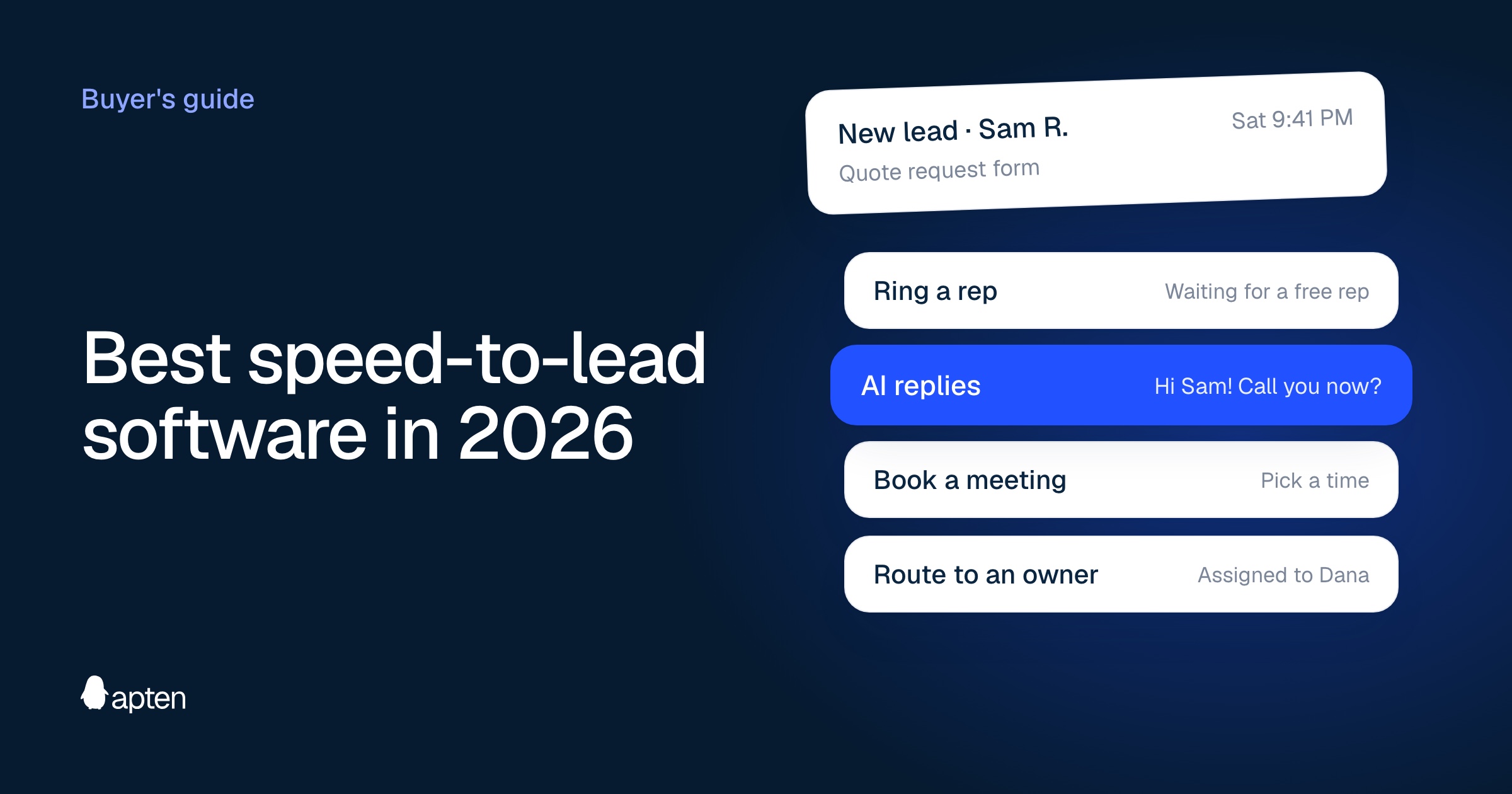
What happens after hours? Ask every vendor what a lead who fills a form at 9:40 p.m. on Saturday gets. Routers wait for a free rep. Agents reply, but check whether they also respect quiet hours in the lead's time zone.
What happens when the first call isn't answered? This is the most common outcome. Does the tool text the lead, retry on a schedule, leave a voicemail, or give up? Test it in a demo by letting a call ring out.
Which channels, and is it one conversation? A voice-only tool misses leads who screen calls. An email-only tool misses leads who want a call. If you need several channels, ask whether the text and the call share one memory or are separate tools.
How does the handoff work? A warm transfer briefs the rep before connecting. Ask what the rep sees and what happens when no one picks up. Our guide to AI handoffs and warm transfers covers what good looks like.
What gets written back to the CRM? "Integrates with your CRM" can mean full activity logs or a webhook you wire up yourself. Ask which fields update after each call and text.
Who owns compliance? Opt-out handling across channels and quiet hours should be built in. Consent capture and DNC scrubbing are usually your job. In February 2024 the FCC ruled that AI-generated voices count as "artificial" voices under the TCPA. Our TCPA and state law guide covers what that means. This isn't legal advice.
What's the real monthly cost? Add setup fees, monthly minimums, per-lead or per-call rates, phone numbers and carrier SMS fees. A $100 plan and a $1,000 minimum can come out close at high volume, or far apart at low volume.
How Apten handles speed to lead
Apten is an AI agent, so it sits in the second group. When a lead comes in from a form, an ad or your CRM, the agent replies within seconds by text or call, at any hour, and keeps going until the lead is booked, handed off or opts out.
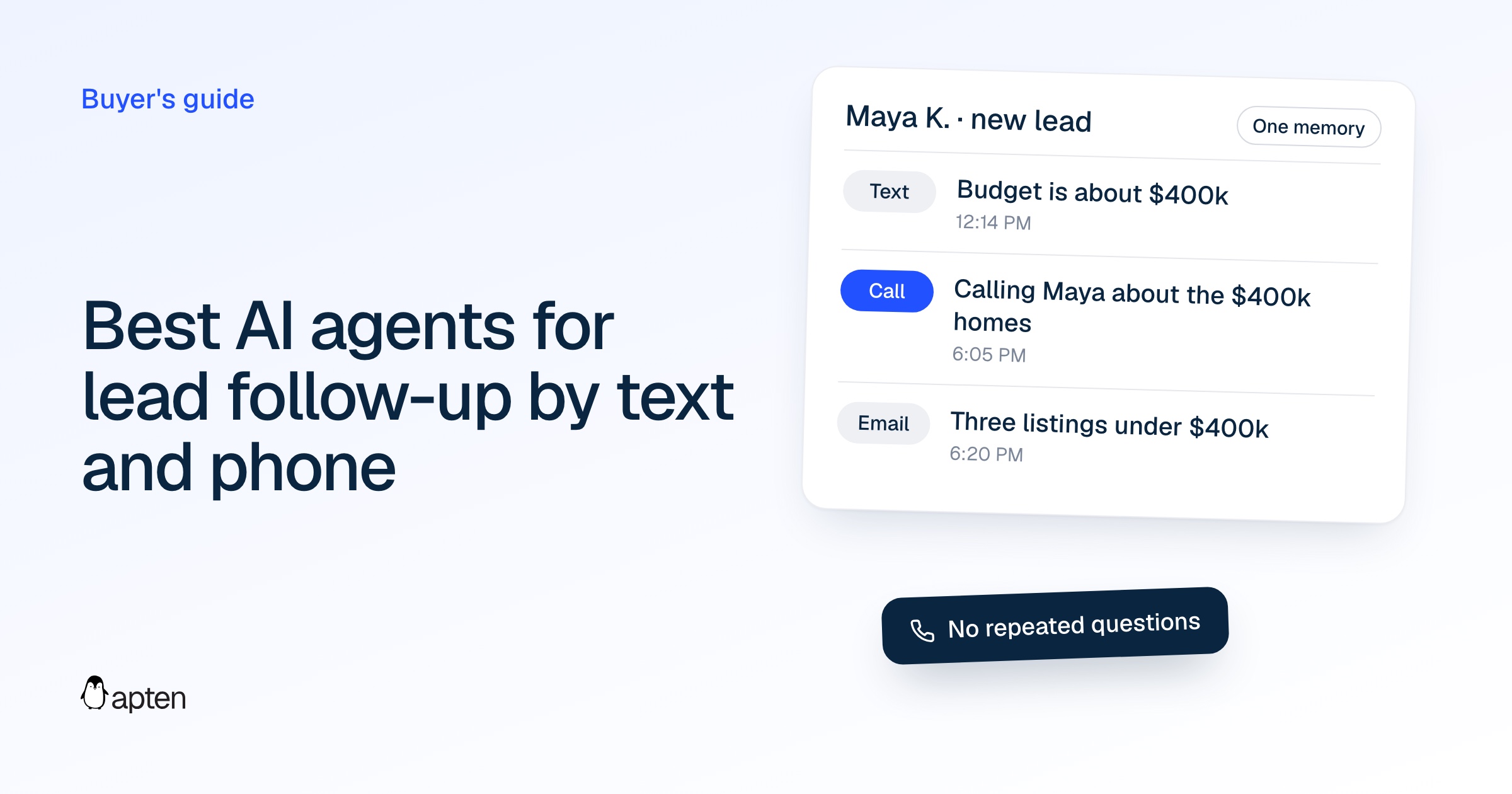
The difference is that one agent works every channel. It can text first, call when the lead replies "call me now," follow up by email, and remember the whole thread. If a call goes to voicemail, it can follow up by text instead of starting over. When a lead is ready for a person, it does a cold or warm transfer to your team.
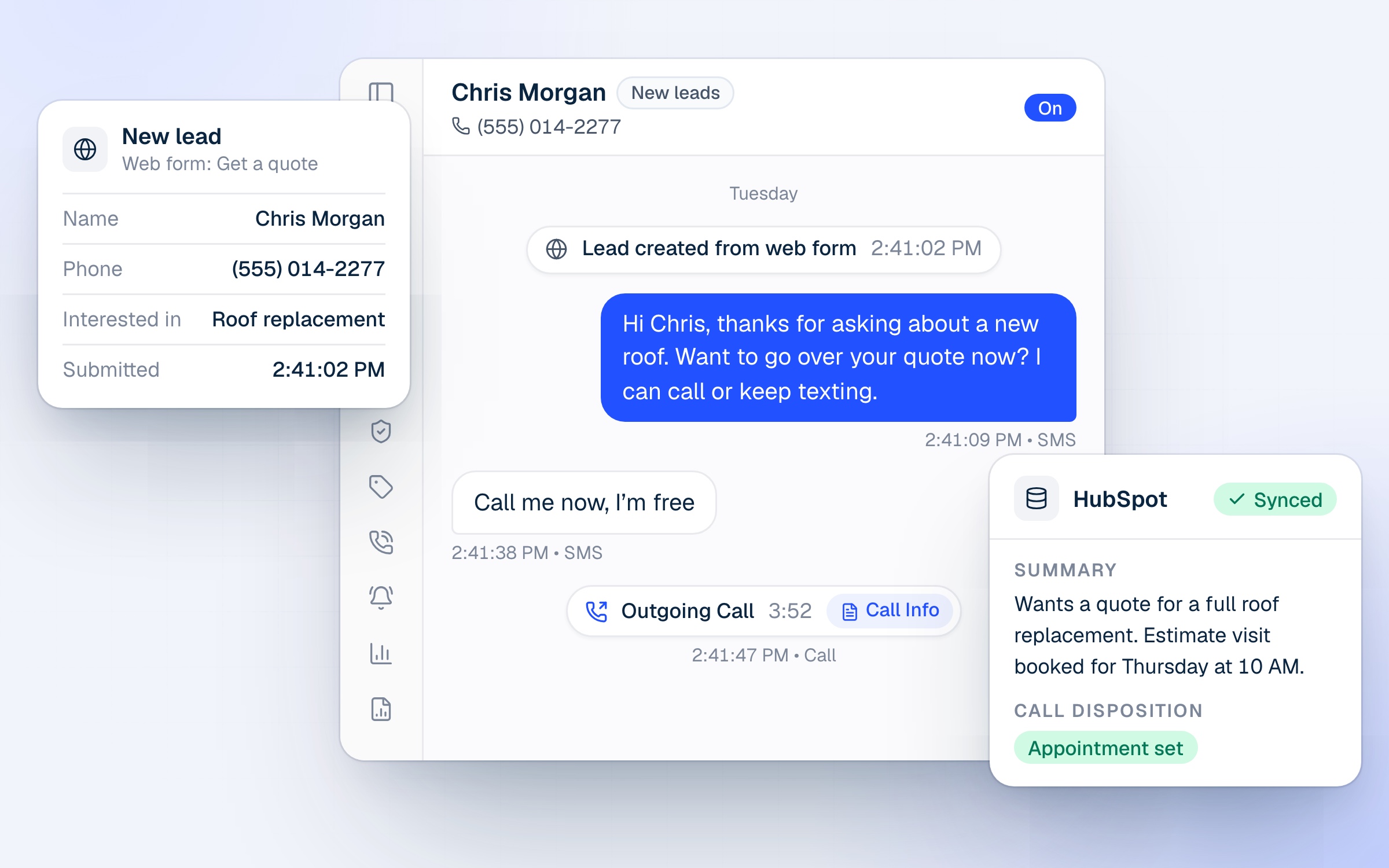
Apten writes back to Salesforce, HubSpot, Microsoft Dynamics 365 and Close. Opt-outs are honored across channels, quiet hours and guardrails are customizable, and webhooks can sync opt-outs to your other systems. Apten has completed a SOC 2 Type II audit and encrypts data at rest and in transit. It helps customers through A2P 10DLC registration for texting. Consent capture and DNC scrubbing stay with you.
Apten has handled over 18 million messages and 4.7 million calls. It also analyzes its own conversations and recommends changes. A person approves every change before it goes live.
The bottom line
Pick the type before the vendor. If you have reps free to call and want them on the phone first, buy a router like Leverly. If you're a dealer, CallRevu; if you're a mortgage lender buying lots of leads, Velocify. If you book B2B demos, Chili Piper. If your leads arrive at all hours and screen calls, buy an AI agent, and test it on the call that doesn't connect.
See how Apten answers a new lead in seconds, by text, call and email, and compare it against everyone else on this list.
Sources
CallRevu: Calldrip brand update, Lead Response integration announcement (August 2026), AutoSuccess, CallRevu acquires Calldrip
FCC, Declaratory Ruling on AI-Generated Voices Under the TCPA, FCC 24-17 (February 2024)
All vendor pages accessed November 2026.